Wednesday, October 22, 2008

Calling all artists!

  • Do you create art in the form of paintings, drawings, sculptures, collages, or shadow boxes? (Or do you know someone who does?)
  • Do you want your work on display in the lobby of the Don Powell Theatre? (Or do you know someone who does?)

The production staff of Hotel Cassiopeia is currently accepting student-created art that was inspired by the life and/or work of Joseph Cornell to display in the lobby during the run of the play. If you are interested (or know someone who is) please e-mail Lauren Beck at lbeck79@gmail.com.

Thursday, October 16, 2008

Research is fun!

Take a look at the Peabody Essex Museums fun, informative, and interactive website about Joseph Cornell.

Thursday, October 9, 2008

Where is Joyce?

Although Cornell idolized innocence, he had a preoccupation with the loss of innocence in the archetypal Nymphet. This is evident in many of the women and girls that Cornell idolized.

One in particular was a girl named Joyce Hunter, a waitress at a coffee shop Cornell frequented in 1964 when he was 61. Cornell, in his typical fashion, admired her from afar, day after day, while she served customers. On Valentine's Day, he had a friend deliver a college to Joyce. Finding out that the teen was a uneducated, runaway mother who jumped from man's bed to another only caused Cornell to obsess more about Joyce. He saw her as a lost innocent that he could save.

Cornell began going to the coffee shop more and more, and Joyce who liked to see what effect her flirtation would have on him. She began visiting at home and managed to charm him into giving her a few of his collage boxes. What Cornell didn't know was that she sold the boxes to an art dealer immediately after he gave them to her. At the age of 61, Cornell enjoyed his first kiss with Joyce, although it is unclear if he kissed her on the mouth. After that, Joyce stopped working at the coffee shop and it was a few months before Cornell heard from her.

One day, Joyce showed up at Cornell's house and asked for another box. It was then that he realized that she was using him and was a lost cause. He told her she could not have any more boxes, so she came back at night with her boyfriend and stole some from Cornell's garage. Joyce was caught trying to sell the boxes and was turned into the police. Strangely, Cornell blamed himself for Joyce's further descent and paid the thousand dollars to bail her out of jail. He was again obsessed with Joyce and hoped that she would turn her life around.

Cornell was devasted when, three months later, he heard that Joyce had been murdered. The fact that his brother Robert died only three months after Joyce, probably caused the two tragedies to intermingle in his brain. He often thought of Joyce, wrote notes to her, and dreamt of her "in a baby blue dress."

Although there is no character named Joyce in Hotel Cassiopeia, I believe that she is represented by two characters: Waitres and Girl. The Waitress in scene 1 captivates Cornell in a way that Joyce did. She initially appears wholly innocent and yet, her later lines are suggestive in a way that hints at the lost innocence of Joyce. The character of the Girl also appears innocent at first in her 60s-style blue dress, but later begins to dance suggestively for Joseph.

Although these opinions about Waitress and Girl are only my interpretations, I believe that they add depth to the roles and connect them to Joseph Cornell's history.

Source:
Utopia Parkway: The Life and Work of Joseph Cornell by Deborah Solomon

Monday, October 6, 2008

Subscribe to the H.C. Blog!

Clicking the "Subscribe" button in the left panel will allow you to use an RSS reader to receive updates of this blog. If you haven't already signed up for an RSS reader, don't worry, it's easy! If you have a Google account (for Blogger, YouTube, Gmail, etc.) you can use Google Reader. If you don't have a Google account, you can easily get one for free here. Or, if you prefer, you can try one of these other readers: Bloglines, Netvibes, Newsgator, My Yahoo, Amphetadesk, or FeedReader. Once you have subscribed to this blog, you can subscribe to all the other regularly updated sites that you read! If you are using the web browser Firefox, you will see a symbol (like the orange one here with the three white lines) in the right hand side of the address bar. Clicking that symbol will allow you to subscribe to the page, or you can click the "Subscribe" button if the page has one.

Thursday, September 25, 2008

Another quote form Charles Mee

Charles Mee was a carefree, athletic teenager when he was struck with polio in 1953. His memoir, A Nearly Normal Life, reveals how this horrible disease changed his life. In the following quote Mee explains how surviving polio shaped his writing style.

"I find, when I write, that I really don't want to write well-made sentences and paragraphs, narratives that flow, structures that have a sense of wholeness and balance, books that feel intact. Intact people should write intact books with sound narratives built of sound paragraphs that unfold with a sense of dependable cause and effect, solid structures you can rely on. That is not my experience of the world. I like a book that feels like a crystal goblet that has been thrown to the floor and shattered, so that its pieces, when they are picked up and arranged on a table, still describe a whole glass, but the glass itself lies in shards. To me, sentences should veer and smash up, careen out of control; get under way and find themselves unable to stop, switch directions suddenly and irrevocably, break off, come to a sighing, inconslusiveness. If a writer's writings constitute a "body of work," then my body of work, to feel true to me, must feel fragmented. And then, too, if you find it hard to walk down the sidewalk, you like, in the freedom of your mind, to make a sentence that leaps and dances now and then before it comes to a sudden stop."

Monday, September 22, 2008

Discovering Mee's Sources

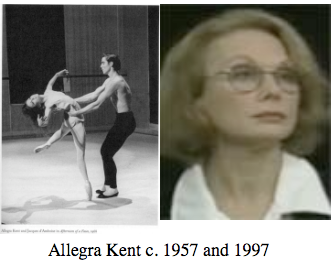
Chuck Mee can be seen as a collage artist who works with words. He frequently takes text from books, plays, songs, and the internet to create his plays. In 1997, Janet Kinosian from The Saturday Evening Post. interviewed Lauren Bacall about her film The Mirror Has Two Faces. Mee used text from this interview to create the dialogue between Lauren and Joseph in Scene 7. You may have noticed that Joseph asks Lauren about her portrayal of "Hannah" who is Bacall's character in The Mirror Has Two Faces. Similarly, Mee takes inspiration from an interview of Allegra Kent by Robert Gottlieb from March 1997 to create the Ballerina's monologue in Scene 9. To read the entire texts of these interviews visit...

Kinosian, Janet. The Saturday Evening Post. Indianapolis: Jan/Feb 1997. Allegra Kent: Always a Dancer...
Robert Gottlieb. Interview. Mar. 1997

Saturday, September 20, 2008

A quote from Charles Mee


"I do love collage and I guess there are many things I love about it. I mean, I sort of think we live today in a global civilization of collage where one way of seeing isn't necessarily privileged above all other ways of seeing and so we walk through a world in which there are multiple competing values, visions, views of things that are juxtaposed with one another that we navigate somehow and maybe we hope even arrive at a larger understanding by being forced to reconcile these odd juxtapositions. So I love what it requires us to do... uh... in our own thinking... George Tsypin designs a set you can't stage a play on and so you're forced to be more resourceful than you otherwise would have been. And I love to put things into a play that actor's can't perform so that it forces them to do something that's more astonishing than they would have to do if it were entirely comfortable. So there are a lot of odd reasons I love collage. And some of my plays really exist just out here in the world of pure collage, and some of them are much further on the other end of the spectrum on having a story line that seemed more like.. uh... normal dramaturgy."

If you would like to watch the entire Charles Mee interview on YouTube, click here.

Sunday, September 14, 2008

Obsessed yet?

As I study the play, Hotel Cassiopeia, I find myself thinking about the imagery of the play more and more. I'm drawn to things I see out in the world that make me think of the play or the artist, Joseph Cornell. So... for the Hotel Cassiopeia super fans, I have some ways you can make your world look a little bit more Cornell-like.

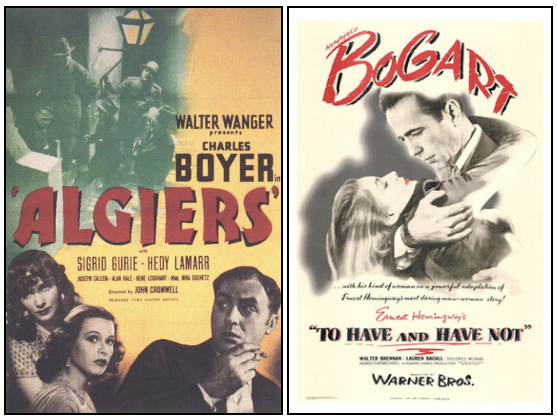
1. Decorate your house. How about movie posters from Algiers or To Have and Have Not? Maybe fill a bowl full of yellow balls of cork. Perfect for your coffee table!
2. Decorate yourself. Watch parts, shells, cockatiels, little bottles of blue sand, feathers. Turn yourself into a Cornell shadow box with Cornell-ish jewelry. Or... get the t-shirt (???)

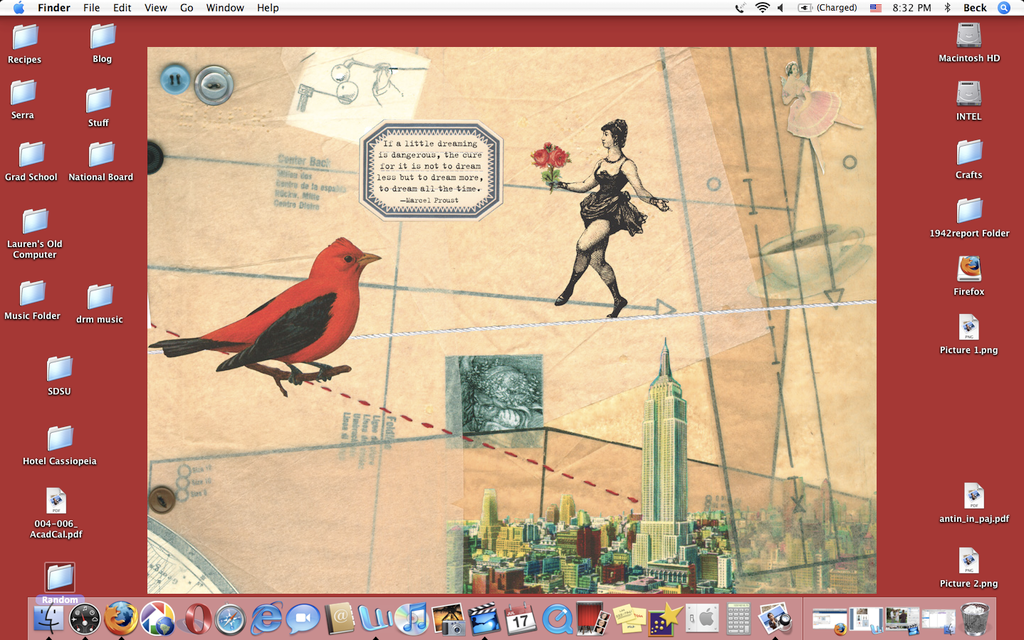
3. Decorate your desktop. The Joseph Cornell Box website has three different downloadable wallpapers for your computer's desktop. Here's mine...
4. Decorate a shadow box. The Joseph Cornell Box also has pictures, text, and textures you can print out and cut out to make your own Cornell shadow box. Or, you can buy the complete package at Amazon.com
Have fun showing your Hotel pride!

Friday, September 12, 2008

Key Terms: Surrealism

One of the most well-known and popular Surrealist artists is Salvador Dali. Most college students would recognize his painting "Persisitence of Memory" (although they may only know it as "the one with the melting clocks.") One night, when Joseph Cornell was screening one of his collage films, Dali flew into a jealous rage, overturned the projector, and called Cornell a skunk. Dali later said, "My idea for a film is exactly that... I never wrote it or told anyone, but it is as if he had stolen it." While Joseph Cornell was never a card-carrying member of the Surrealist movement, Surrealism did provide a context in which his art was accepted and understood.

The founder of Surrealism, André Breton, defined Surrealism as "Pure psychic automatism, by which it is intended to express, verbally, in writing, or by other means, the real process of thought. Thought's dictation, in the absence of all control exercised by the reason and outside all aesthetic or moral preoccupations... Surrealism rests in the belief in the superiorreality of certain forms of association neglected heretofore; in the omnipotence of the dream and in the disinterested play of thought. It tends definitely to do away with all other psychic mechanisms and to substitute itself for them in the solution of the principal problems of life."

In other words, surrealists:
  • Strive to allow the impulses of the unconscious mind to guide the production of their art
  • Believe in Freud's idea of analyzing dreams to explore the subconscious
  • Strip images of their meaning and allow the unconscious to assign them a new meaning
Joseph Cornell was first inspired by the work of surrealist, Max Ernst. Cornell began making collages that were similar to Ernsts. After he developed his own style of art - his famous shadowboxes - Cornell exhibited his work with Surrealists and became friends with many of them. Cornell's work was dreamlike and certainly used images to evoke feelings from his subconscious, however, he never truly fit into the Surrealist mold. He was a "mama's boy who spent his Sundays in church and quavered before visions of fleshly sin." Many aspects of Surrealism such as "their call for revolution, their hatred of the church, their furious loathing of the parental generation... made him a most improbable disciple." Cornell once said that he felt Surrealism, "has healthier possibilities than have been developed."


Sources:
  • Utopia Parkway: The Life and work of Joseph Cornell by Deborah Solomon
  • Manifestoes of Surrealism by André Breton
  • Giornal Nuovo

Sunday, September 7, 2008

Cornell and Christian Science: Part 3

Continued from Cornell and Christian Science: Part 2

3. God’s infinite goodness, realized in prayer and action, heals

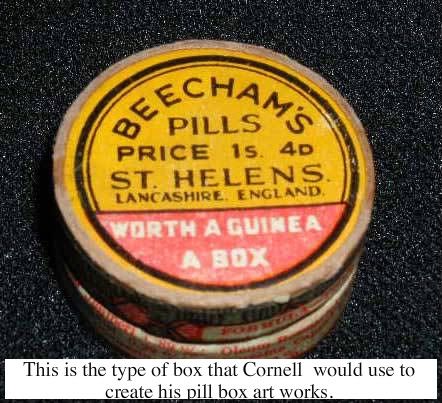
Before Joseph began making his famous shadow boxes, he experimented with small paperboard pill boxes. Cornell would buy pill boxes similar to the one in the picture, empty out their contents, and refill them with "tiny shells, sequins, red ground glass, rhinestones, beads, black thread, scraps of blue paper", and other bits of ephemera. It is unlikely that Cornell used any of the medicines that came in the boxes, as Christian Science preaches against the use of medicine. Cornell made other works that explored his interest in spiritual healing. His pharmacy boxes included small bottles filled with the same type of items that he put into his pill boxes. Could Cornell have been trying to find a spiritual cure through his art?


Sources: