

 Posts


Although Cornell idolized innocence, he had a preoccupation with the loss of innocence in the archetypal Nymphet. This is evident in many of the women and girls that Cornell idolized.
One in particular was a girl named Joyce Hunter, a waitress at a coffee shop Cornell frequented in 1964 when he was 61. Cornell, in his typical fashion, admired her from afar, day after day, while she served customers. On Valentine's Day, he had a friend deliver a college to Joyce. Finding out that the teen was a uneducated, runaway mother who jumped from man's bed to another only caused Cornell to obsess more about Joyce. He saw her as a lost innocent that he could save.
Cornell began going to the coffee shop more and more, and Joyce who liked to see what effect her flirtation would have on him. She began visiting at home and managed to charm him into giving her a few of his collage boxes. What Cornell didn't know was that she sold the boxes to an art dealer immediately after he gave them to her. At the age of 61, Cornell enjoyed his first kiss with Joyce, although it is unclear if he kissed her on the mouth. After that, Joyce stopped working at the coffee shop and it was a few months before Cornell heard from her.
One day, Joyce showed up at Cornell's house and asked for another box. It was then that he realized that she was using him and was a lost cause. He told her she could not have any more boxes, so she came back at night with her boyfriend and stole some from Cornell's garage. Joyce was caught trying to sell the boxes and was turned into the police. Strangely, Cornell blamed himself for Joyce's further descent and paid the thousand dollars to bail her out of jail. He was again obsessed with Joyce and hoped that she would turn her life around.
Cornell was devasted when, three months later, he heard that Joyce had been murdered. The fact that his brother Robert died only three months after Joyce, probably caused the two tragedies to intermingle in his brain. He often thought of Joyce, wrote notes to her, and dreamt of her "in a baby blue dress."
Although there is no character named Joyce in Hotel Cassiopeia, I believe that she is represented by two characters: Waitres and Girl. The Waitress in scene 1 captivates Cornell in a way that Joyce did. She initially appears wholly innocent and yet, her later lines are suggestive in a way that hints at the lost innocence of Joyce. The character of the Girl also appears innocent at first in her 60s-style blue dress, but later begins to dance suggestively for Joseph.
Although these opinions about Waitress and Girl are only my interpretations, I believe that they add depth to the roles and connect them to Joseph Cornell's history.
Source:
Utopia Parkway: The Life and Work of Joseph Cornell by Deborah Solomon
Showing posts with label Characters. Show all posts
Showing posts with label Characters. Show all posts
Thursday, October 9, 2008


Monday, September 22, 2008
Discovering Mee's Sources
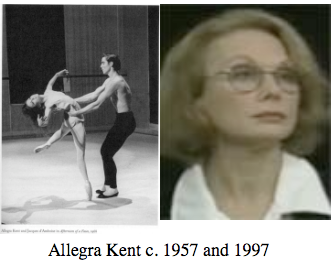
Chuck Mee can be seen as a collage artist who works with words. He frequently takes text from books, plays, songs, and the internet to create his plays. In 1997, Janet Kinosian from The Saturday Evening Post. interviewed Lauren Bacall about her film The Mirror Has Two Faces. Mee used text from this interview to create the dialogue between Lauren and Joseph in Scene 7. You may have noticed that Joseph asks Lauren about her portrayal of "Hannah" who is Bacall's character in The Mirror Has Two Faces. Similarly, Mee takes inspiration from an interview of Allegra Kent by Robert Gottlieb from March 1997 to create the Ballerina's monologue in Scene 9. To read the entire texts of these interviews visit...
Kinosian, Janet. The Saturday Evening Post. Indianapolis: Jan/Feb 1997.  Allegra Kent: Always a Dancer...
Robert Gottlieb. Interview. Mar. 1997
 Allegra Kent: Always a Dancer...
Robert Gottlieb. Interview. Mar. 1997
Tuesday, September 2, 2008
Cornell and Christian Science: Part 2
Continued from Cornell and Christian Science: Part 1
2. The true nature of each individual as a child of God is spiritual.
Christian Scientists believe that that human beings were created in the image of the God as stated in the Bible in Genesis 1:27. Christian Scientists have an interpretation of this that differs from other Christian religions. Being that they believe that God is spiritual (and not in any material form), humans, too, are purely spiritual beings. This being true, pain, disease, and other ailments as sociated with a physical body are not possible and therefore must be manifestations of a troubled mind. These ailments would, consequently, disappear if the sufferer could truly believe that the pain did not exist.
It makes sense that Cornell would be attracted to a religion that would deny the existence of the physical world. It must have been hard for Cornell to see his intelligent, kind and lively brother incapacitated with an incurable condition - Cerebral Palsy. To stumble upon a religion that not only claimed to be able to heal Robert, but that also insisted that his condition was all in the mind, must have been something that brought Cornell hope and a sense of relief.
TO BE CONTINUED...
Sources:
2. The true nature of each individual as a child of God is spiritual.
Christian Scientists believe that that human beings were created in the image of the God as stated in the Bible in Genesis 1:27. Christian Scientists have an interpretation of this that differs from other Christian religions. Being that they believe that God is spiritual (and not in any material form), humans, too, are purely spiritual beings. This being true, pain, disease, and other ailments as
sociated with a physical body are not possible and therefore must be manifestations of a troubled mind. These ailments would, consequently, disappear if the sufferer could truly believe that the pain did not exist.It makes sense that Cornell would be attracted to a religion that would deny the existence of the physical world. It must have been hard for Cornell to see his intelligent, kind and lively brother incapacitated with an incurable condition - Cerebral Palsy. To stumble upon a religion that not only claimed to be able to heal Robert, but that also insisted that his condition was all in the mind, must have been something that brought Cornell hope and a sense of relief.
TO BE CONTINUED...
Sources:
- Utopia Parkway: The Life and Work of Joseph Cornell by Deborah Solomon
- Joseph Cornell's Vision of Spiritual Order by Lindsay Blair
- Science and Health by Mary Baker Eddy
- The Church of Christ, Scientist website - http://www.tfccs.com
Subscribe to:
Posts (Atom)
