Showing posts with label Charles Mee. Show all posts

Tuesday, November 18, 2008

Charles and Joseph: Fractured Lives

What happens when a life-changing event happens to someone in the transition between childhood and adulthood? For Charles Mee and Joseph Cornell, it led to the creation of beautiful and fragmented art.

Joseph Cornell's father died when he was 13, thrusting him prematurely into the role of head of the household. He would assume the burden of supporting his mother, Helen, and his disabled brother, Robert, until their deaths. Only a few months after his father died, Cornell was sent away from his home in New York to a boarding school in Massachusetts. The trauma of the separations he experienced during his thirteenth year no doubt affected the way his life unfolded. He never married or had normal relationships with women. Could this be due to the trauma he experienced during puberty? It's no wonder that much of his art is devoted to memorializing childhood - it was when he was happiest.

Charles Mee's life also changed drastically when he was a young teenager. At 14, the athletic, fun-loving youth was stricken with polio. He spent months recovering. During this dark time, he began reading; a teacher brought him Plato's Symposium to keep him entertained during his hospital stay. His future as a football player was set aside and Mee discovered the painful reality of how people with disabilities are treated, even by their family and friends. Mee has said that his work is fragmented because his life has not been ordered and intact.

These two collage artists - one with images, one with words - have left works that allow us to view the world the way someone has when his life has been broken and pieced back together.

Thursday, October 23, 2008

Discovering Mee's Sources: Part 2

As I've mentioned in previous posts, Hotel Cassiopeia is a collage composed of a variety of sources: interviews, diaries, letters, and other bits of internet gold. For example, does this interview with Don and Lillian Stokes (aka Mr. and Mrs. Birdwatching America) look familiar?

Why is the play titled Hotel Cassiopeia?

“Because, Cassiopeia the constellation lasts through all eternity, while a hotel is where people check in for a couple of nights.”

- Charles Mee

Cassiopeia 1 c. 1960

I like to think of people "checking in" to the theatre for the evening, but leaving with a little piece of that eternity that Joseph Cornell was trying to preserve in his art.


Thursday, September 25, 2008

Another quote form Charles Mee

Charles Mee was a carefree, athletic teenager when he was struck with polio in 1953. His memoir, A Nearly Normal Life, reveals how this horrible disease changed his life. In the following quote Mee explains how surviving polio shaped his writing style.

"I find, when I write, that I really don't want to write well-made sentences and paragraphs, narratives that flow, structures that have a sense of wholeness and balance, books that feel intact. Intact people should write intact books with sound narratives built of sound paragraphs that unfold with a sense of dependable cause and effect, solid structures you can rely on. That is not my experience of the world. I like a book that feels like a crystal goblet that has been thrown to the floor and shattered, so that its pieces, when they are picked up and arranged on a table, still describe a whole glass, but the glass itself lies in shards. To me, sentences should veer and smash up, careen out of control; get under way and find themselves unable to stop, switch directions suddenly and irrevocably, break off, come to a sighing, inconslusiveness. If a writer's writings constitute a "body of work," then my body of work, to feel true to me, must feel fragmented. And then, too, if you find it hard to walk down the sidewalk, you like, in the freedom of your mind, to make a sentence that leaps and dances now and then before it comes to a sudden stop."

Monday, September 22, 2008

Discovering Mee's Sources

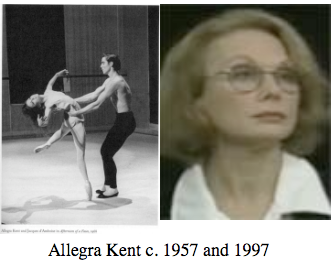
Chuck Mee can be seen as a collage artist who works with words. He frequently takes text from books, plays, songs, and the internet to create his plays. In 1997, Janet Kinosian from The Saturday Evening Post. interviewed Lauren Bacall about her film The Mirror Has Two Faces. Mee used text from this interview to create the dialogue between Lauren and Joseph in Scene 7. You may have noticed that Joseph asks Lauren about her portrayal of "Hannah" who is Bacall's character in The Mirror Has Two Faces. Similarly, Mee takes inspiration from an interview of Allegra Kent by Robert Gottlieb from March 1997 to create the Ballerina's monologue in Scene 9. To read the entire texts of these interviews visit...

Kinosian, Janet. The Saturday Evening Post. Indianapolis: Jan/Feb 1997. Allegra Kent: Always a Dancer...
Robert Gottlieb. Interview. Mar. 1997

Saturday, September 20, 2008

A quote from Charles Mee


"I do love collage and I guess there are many things I love about it. I mean, I sort of think we live today in a global civilization of collage where one way of seeing isn't necessarily privileged above all other ways of seeing and so we walk through a world in which there are multiple competing values, visions, views of things that are juxtaposed with one another that we navigate somehow and maybe we hope even arrive at a larger understanding by being forced to reconcile these odd juxtapositions. So I love what it requires us to do... uh... in our own thinking... George Tsypin designs a set you can't stage a play on and so you're forced to be more resourceful than you otherwise would have been. And I love to put things into a play that actor's can't perform so that it forces them to do something that's more astonishing than they would have to do if it were entirely comfortable. So there are a lot of odd reasons I love collage. And some of my plays really exist just out here in the world of pure collage, and some of them are much further on the other end of the spectrum on having a story line that seemed more like.. uh... normal dramaturgy."

If you would like to watch the entire Charles Mee interview on YouTube, click here.